
30.7K
Downloads
349
Episodes
The Chills at Will Podcast is a celebration of the visceral beauty of literature. This beauty will be examined through close reads of phrases and lines and passages from fiction and nonfiction that thrills the reader, so much so that he wants to read again and again to replicate that thrill. Each episode will focus on a different theme, such as "The Power of Flashback," "Understatement," "Cats in the Cradle," and "Chills at Will: Origin Story."
Episodes
Wednesday Sep 09, 2020
Wednesday Sep 09, 2020
SHOW NOTES:
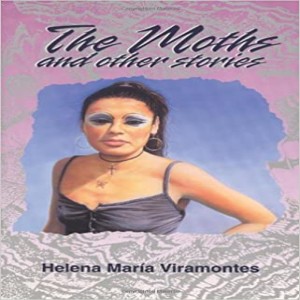
On Episode 17, Pete discusses “Incredible Endings and Mother-Child Relationships,” as seen in writing by Pat Mora and Helena Maria Viramontes.
You can now subscribe to the podcast on Apple Podcasts, and leave me a five-star review. You can also ask for the podcast by name using Alexa, and find the pod on Spotify. Follow me on IG, where I’m @chillsatwillpodcast, or on Twitter, where I’m @chillsatwillpo1.
This is a passion project of mine, a DIY operation, and I’d love for your help in promoting what I’m convinced is a unique and spirited look at an often-ignored art form.
You can find the literature referenced today in Pat Mora’s collection from 1984, Chants, published by Arte Publico Press. Helena Maria Viramontes’ The Moths and Other Stories, was published in 1995, also by Arte Publico Press.
The intro song for The Chills at Will Podcast is “Wind Down” (Instrumental Version), and the other cool song played on this episode was “Hoops” (Instrumental Version”) by Matt Weidauer, used through Arches Audio. Matt’s artist page can be found here.
Authors Mentioned and Allusions and Songs Referenced During the Episode:
Pat Mora: https://en.wikipedia.org/wiki/Pat_Mora
Helena Maria Viramontes: https://en.wikipedia.org/wiki/Helena_Maria_Viramontes
Definitions and Etymology of Catharsis:
Tuesday Sep 01, 2020
Tuesday Sep 01, 2020
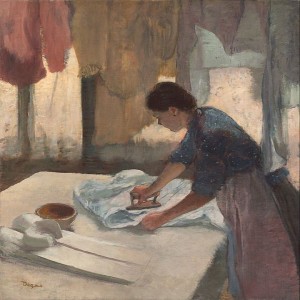
SHOW NOTES: On Episode 16, Pete discusses “Incredible Endings and Mother-Daughter Relationships,” as seen in writing by Tillie Olsen, Jamaica Kincaid, and Huda Al-Marashi. In “As I Stand Here Ironing,” Olsen leaves us with an incredibly apt image wholly representative of the protagonist’s hopes for her daughter. In her short story, “Girl,” Kincaid’s protagonist asks a probing question of both her daughter and the reader in a way that leaves the reader pondering it for a long while after taking her gaze off the page.
Al-Marashi’s final paragraph is a sort of promise to, and a prayer for, her daughter. Her work is nonfiction, which is a nice addition to the podcast. I actually read a lot more nonfiction than you might think from listening to this podcast, and Al-Marashi’s shining work is a perfect fit for this episode.
Like, share, and subscribe to the podcast on Apple Podcasts, and leave a five-star review. You can also ask for the podcast by name using Alexa, and find the pod on Spotify.
You can follow Pete on Instagram, where he’s @chillsatwillpodcast, or on Twitter, where he’s @chillsatwillpo1.
This is a passion project, a DIY operation, and Pete would love for your help in promoting a unique and spirited look at an often-ignored art form.
You can find the literature referenced today in Tillie Olsen’s 1961 Tell Me a Riddle collection, published by New World Writing. Both Olsen’s “As I Stand Here Ironing” and Jamaica Kincaid’s “Girl” are widely anthologized. Kincaid’s story was published in the collection At the Bottom of the River, published by Farrar, Straus and Giroux.
Huda Al-Marashi’s “A Birthday at the Cemetery” was published in the August 7, 2020, edition of The New York Times.
The intro song for The Chills at Will Podcast is “Wind Down” (Instrumental Version), and the other cool song played on this episode was “Hoops” (Instrumental Version”) by Matt Weidauer, used through Arches Audio. Matt’s artist page can be found here.
Authors Mentioned and Allusions and Songs Referenced During the Episode:
Tillie Olsen: https://en.wikipedia.org/wiki/Tillie_Olsen
Margaret Atwood Speaks of Olsen’s Hectic Life: https://www.nytimes.com/2007/01/03/books/03olsen.html
Jamaica Kincaid: https://en.wikipedia.org/wiki/Jamaica_Kincaid
Huda Al-Marashi’s Amazon.com Page: https://www.amazon.com/Books-Huda-Al-Marashi/s?rh=n%3A283155%2Cp_27%3AHuda+Al-Marashi
Huda Al-Marashi’s “A Birthday at the Cemetery”: https://www.nytimes.com/2020/08/07/well/family/a-birthday-at-the-cemetery.html
Saudade Description: https://en.wikipedia.org/wiki/Saudade
Wednesday Aug 26, 2020
Wednesday Aug 26, 2020
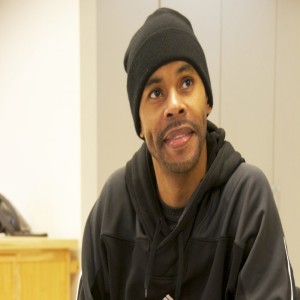
Rus Bradburd is a Renaisssance Man-a former Division I basketball coach, a virtuoso fiddler, an author of four books, and a professor in creative writing at New Mexico State University. His heart-wrenching and impeccably-researched book All the Dreams We've Dreamed: A Story of Hoops and Handguns on Chicago's West Side is discussed, especially with regards to its stalwart mentor/teacher/coach extraordinaire, Shawn Harrington, who was paralyzed while diving on top of his daughter during a 2014 shooting in Chicago. Shawn's GoFundMe, which will allow him greater independence and ADA-accessible housing is here. Please give if you can!
The discussion of the book and of Shawn Harrington begins at 37:14.
Pete and Rus also discuss Rus' days as a recruiter and coach for UTEP and NMSU, his days as a coach in lowly Irish basketball, his circuitous and unique route to professional writer and writing teacher, among other things. The discussion is rife with great recommendations for chill-inducing authors, books, short stories, and even a documentary!
SHOW NOTES:
Rus Bradburd teaches writing classes in New Mexico State University’s MFA program. A Chicago native, he coached basketball at UTEP and New Mexico State for fourteen seasons before resigning to pursue a writing career in 2000.
At NMSU, he studied with Robert Boswell, Antonya Nelson, and Kevin McIlvoy. His fiction has appeared in The Southern Review, Colorado Review, Puerto del Sol, Freight Stories, and Aethlon.
Since retiring from college coaching, his essays have appeared in New York Times, The Houston Chronicle, El Paso Times, Las Cruces Sun-News, Heartland Journal, SLAM Magazine, Bounce, and Los Angeles Times.
Rus went to Ireland in 2002 to coach Tralee's Frosties Tigers. Paddy on the Hardwood: A Journey in Irish Hoops was his first book, published in 2006. In 2010, he published Forty Minutes of Hell: The Extraordinary Life of Nolan Richardson, and in 2013, a book of fiction called Make It, Take It.
Our main discussion of his writing on today’s episode will be about his 2018 nonfiction book, All the Dreams We've Dreamed: A Story of Hoops and Handguns on Chicago's West Side. The book is impeccably researched and features Rus himself as a character as he recounts a page-turning set of stories about basketball, gun violence, family and community ties, and redemption.
Selected Publications by Rus Bradburd:
Rus and Shawn Harrington's Connections:
2018 WBUR Story about 20 Year+ relationship between the two
Shawn and Rus on HBO's Real Sports
Shawn Harrington:
Alma mater NMSU honors Shawn at halftime of 2017 game
"West Side Story: Shawn Harrington"-2015 News Segment from NBC Sports Chicago
Trailer for 2019's ChiTown, which features Shawn
Podcast Info and Social Media
Like, share, and subscribe to the podcast on Apple Podcasts, and leave a five-star review. You can also ask for the podcast by name using Alexa, and find the pod on Spotify.
You can follow Pete on Instagram, where he’s @chillsatwillpodcast, or on Twitter, where he’s @chillsatwillpo1.
This is a passion project, a DIY operation, and Pete would love for your help in promoting a unique and spirited look at an often-ignored art form.
The intro song for The Chills at Will Podcast is “Wind Down” (Instrumental Version), and the other cool song played on this episode was “Hoops” (Instrumental Version”) by Matt Weidauer, used through Arches Audio. Matt’s artist page can be found here.
Monday Aug 17, 2020
Monday Aug 17, 2020
*This is not a new episode-it's just in a different format for my Spotify people! This is my most downloaded episode, and one that is very closely related to the ongoing racism that is an ugly legacy of United States history.
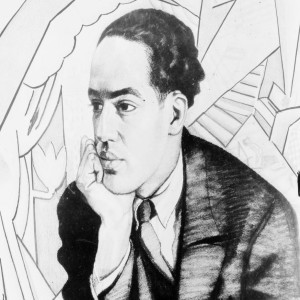
In this episode, Pete explores the festering and righteous and justified anger felt by many over the continued oppression of African-Americans at the hands of law enforcement and society as a whole. This anger is made visible through a close read of Langston Hughes’ incredibly-powerful poem, “The Colored Soldier,” in which he talks to his brother, killed in France in WWI, in a dream.
Authors Mentioned and Allusions and Songs Referenced During the Episode:
Rage Against the Machine’s “Freedom”-with “Anger is a gift” lyrics
Song at beginning and end of episode: “Wicked” (Instrumental) by Ice Cube

Monday Aug 17, 2020
Monday Aug 17, 2020
This is not a new episode-it's in a different format for my Spotify users!

Monday Aug 10, 2020
Monday Aug 10, 2020
On Episode 14, Pete discusses “MAD Writer Skills: Characterization Edition,” as seen in writing by Khaled Hosseini, Denis Johnson, and Elie Wiesel. Hosseini’s description of the protagonist’s father is ridiculously evocative and visual and powerful. Denis Johnson’s description of a majorly minor character packs so much into a dozen or so words. His writing is the equivalent of James Harden scoring 25 points on ten shots from the field, with no turnovers in 20 minutes played. Wiesel’s characterization comes through a mix of action, an unforgettable setting, and unspeakable tragedy.
Like, share, and subscribe to the podcast on Apple Podcasts, and leave a five-star review. You can also ask for the podcast by name using Alexa, and find the pod on Spotify.
You can follow Pete on Instagram, where he’s @chillsatwillpodcast, or on Twitter, where he’s @chillsatwillpo1.
This is a passion project, a DIY operation, and Pete would love for your help in promoting a unique and spirited look at an often-ignored art form.
You can find the literature referenced today in Khaled Hosseini’s novel The Kite Runner, published by Riverhead Books in 2003. Denis Johnson’s A Tree of Smoke was published in 2007 by Farrar, Straus, and Giroux. Elie Wiesel’s Night was published in 1960 by Hill and Wang.
The intro song for The Chills at Will Podcast is “Wind Down” (Instrumental Version), and the other cool song played on this episode was “Hoops” (Instrumental Version”) by Matt Weidauer, used through Arches Audio. Matt’s artist page can be found here.
SHOW NOTES: On Episode 14, Pete discusses “Mad Writers Skills: Characterization Edition,” as seen in writing by Khaled Hosseini, Denis Johnson, and Elie Wiesel. Hosseini’s description of the protagonist’s father is ridiculously evocative and visual and powerful. Denis Johnson’s description of a majorly minor character packs so much into a dozen or so words. His writing is the equivalent of James Harden scoring 25 points on ten shots from the field, with no turnovers in 20 minutes played. Wiesel’s characterization comes through a mix of action, an unforgettable setting, and unspeakable tragedy.
Like, share, and subscribe to the podcast on Apple Podcasts, and leave a five-star review. You can also ask for the podcast by name using Alexa, and find the pod on Spotify.
You can follow Pete on Instagram, where he’s @chillsatwillpodcast, or on Twitter, where he’s @chillsatwillpo1.
This is a passion project, a DIY operation, and Pete would love for your help in promoting a unique and spirited look at an often-ignored art form.
You can find the literature referenced today in Khaled Hosseini’s novel The Kite Runner, published by Riverhead Books in 2003. Denis Johnson’s A Tree of Smoke was published in 2007 by Farrar, Straus, and Giroux. Elie Wiesel’s Night was published in 1960 by Hill and Wang.
The intro song for The Chills at Will Podcast is “Wind Down” (Instrumental Version), and the other cool song played on this episode was “Hoops” (Instrumental Version”) by Matt Weidauer, used through Arches Audio. Matt’s artist page can be found here.
Authors Mentioned and Allusions and Songs Referenced During the Episode:
Pete's Short Story "Beauty," where for once he was proud of characterization-particularly of the protagonist's mother
Tony Soprano (explicit language)
Training Day’s Alonzo Harris (explicit language)
Don Draper (explicit language)
“The Revelator” by Jim Lewis in New York Times

Monday Aug 03, 2020
Monday Aug 03, 2020
SHOW NOTES: On Lucky Episode 13, complete with a new theme song for the podcast, Pete discusses Mad Writers Skills,” as seen in writing by Ocean, Vuong, David Foster Wallace, and Tobias Wolff. While Foster Wallace’s lines reference something lighthearted, they are nonetheless stunningly true to life. Vuong’s work rings out with beauty, so talented is he with his phrasing, in lines deal with trauma and acceptance. Wolff’s lines have every word in the best possible placement to display a sad truism of the world. These are writers whose work titillates, entertains, and puts the reader in awe.
Hopefully this 13th episode will bring Pete luck in having you, dear listener, subscribe to the podcast on Apple Podcasts, and leaving a five-star review. You can also ask for the podcast by name using Alexa, and find the pod on Spotify starting August 5. You can follow Pete on Instagram, where he’s @chillsatwillpodcast, or on Twitter, where he’s @chillsatwillpo1.
This is a passion project, a DIY operation, and Pete would love for your help in promoting a unique and spirited look at an often-ignored art form.
You can find the literature referenced today in Ocean Vuong’s novel On Earth We’re Briefly Gorgeous, published by Penguin Press in 2019. David Foster Wallace’s essay “A Supposedly Fun Thing I'll Never Do Again” can be found in A Supposedly Fun Thing I'll Never Do Again: Essays and Arguments, published in 1998 by Back Bay Books. Tobias Wolff’s “The Chain” is from the July 1, 1996 issue of Esquire Magazine, and/or his collection.
The intro song for The Chills at Will Podcast is “Wind Down” (Instrumental Version), and the other cool song played on this episode was “Simple Math” (Instrumental Version” by Jake Haws, used through ArchesAudio.com.
Tuesday Jul 07, 2020
Tuesday Jul 07, 2020
Excited to present my interview with 2/3 of the Nervous Ghost Press team, Matthew Mejia and Michael Nicholson, proud grads of Mills College MFA. These dynamic writers and readers and I discussed philosophy and influences, the power of writing and reading, the craft of writing, and their upcoming virtual readings that coincide with today’s publication of The Writing for Life anthology.
Check out Episode 12 on Apple Podcasts, or at chillsatwillpodcast6.podbean.com
More info on Nervous Ghost Press at www.nervousghostpress.com
Also, you can ask Alexa to hear the podcast!
Tuesday Jul 07, 2020
Tuesday Jul 07, 2020
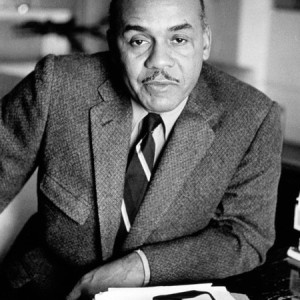
In this episode, Pete discusses Ralph Ellison’s Invisible Man, building on the ideas of righteous, historical, and justified anger felt by African-Americans over their oppression throughout American history. The book’s opening scene, the infamous “battle royal chapter” is the focus of the episode, as it is highly allegorical in symbolizing so many parts of the African-American male experience.
Tuesday Jun 16, 2020
Tuesday Jun 16, 2020
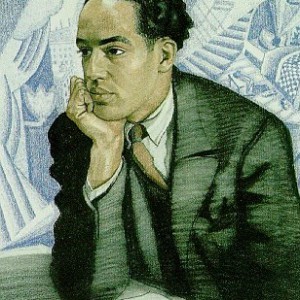
In this episode, Pete explores the festering and righteous and justified anger felt by many over the continued oppression of African-Americans at the hands of law enforcement and society as a whole. This anger is made visible through a close read of Langston Hughes’ incredibly-powerful poem, “The Colored Soldier,” in which he talks to his brother, killed in France in WWI, in a dream.
Authors Mentioned and Allusions and Songs Referenced During the Episode:
Rage Against the Machine’s “Freedom”-with “Anger is a gift” lyrics
Song at beginning and end of episode: “Wicked” (Instrumental) by Ice Cube
Tuesday Jun 09, 2020
Tuesday Jun 09, 2020
Pete is honored to have as his first interviewee his former college professor and standout writer, Claudia MonPere McIsaac. They talk about the writer's life and literature that has inspired and moved them. They also discuss giving and receiving constructive criticism in and out of writer's workshops, writing and reading and their evolution in these trying times, finding writing inspiration, the college writing environment, and tips for creating dialogue and realism. They finish with a close read and conversation about the genesis and mechanics of Claudia's beautiful story, "All Sweet Things Float," published in 2003 by The Prairie Schooner. Pete is especially moved by the story's ending and is fortunate, as is the listener, to hear Claudia read her own words from this ending and explain their significance.
"All Things Float" can be read here: muse.jhu.edu/article/41665
Claudia MonPere McIsaac writes fiction, poetry, and memoir. Her work appears in many anthologies and literary magazines, including the Kenyon Review, New Ohio Review, The Cincinnati Review, and River Teeth. Awards include The Georgetown Review Fiction Award and a Hedgebrook residency. She’s taught at Santa Clara University for many years.

Friday May 15, 2020
Friday May 15, 2020
This episode deals with incredibly joyful endings that capture a “moment in time” depicted with great passion and imagery. I discuss Tobias Wolff’s short short “Powder,” about a father and son’s last trip before the parents’ divorce, and Khaled Hosseini's thrilling depiction of a carefree and innocent and redemptive bonding moment between an adoptive father and son.
Thursday May 07, 2020
Thursday May 07, 2020
This episode deals with “O’Henry” endings from Ernest Hemingway’s “A Day’s Wait,” Shirley Jackson’s “The Lottery,” and Jorge Luis Borges’ “The Gospel According to Mark.” The meaning of this type of ending is explained, and the stories are explained as ones for which a second reading is such a pleasurable experience, as this second reading is so different than the first, once one is armed with knowledge of the thrilling plot twists that accompany the endings. Discussion further centers on archetypal masculinity as illustrated in Hemingway’s story, Pete’s doubly-pleasant surprise in reading Jackson’s story, and the power of Borges’ ending being built through his finely-placed literary breadcrumbs. Allusions to Marge Simpson’s love for Bart, Ethan Hawke’s involuntary reaction to betrayal in “Training Day,” and a subtle Sopranos reference help to illuminate the powerful endings, and are in no way gratuitous...right?
Authors Mentioned and Allusions and Songs Referenced During the Episode:
"Plot Twist" by Marc. E Bassy (Marc. E Bassy)
"The Gospel According to Mark" found in the October 23, 1971 Issue of The New Yorker
Marge and "Little Boy Barty" (#6 on the list)
Saturday May 02, 2020
Saturday May 02, 2020
Pete muses on the absolutely over-the-top video for Master P’s “Make ‘Em Say ‘Uhh,’ “ which is in line with the lavish descriptions used by the great writers featured in the episode. Pete describes his experience in that most exaggerated and operatic of Italian cities, Naples (his poem written during his 2009 trip is below), and discusses the work of the “Naples of writers”: Mario Puzo, Gay Talese, and Niall Williams. Though sometimes close to the line of “purple prose,” these writers stick to the rules outlined by the great Anne Lamott and craft thrilling prose that adheres to the “one-inch picture frame” of Lamont’s book Bird by Bird.
Authors Mentioned and Allusions and Songs Referenced During the Episode:
Master P's "Make 'Em Say 'Uhh.' " (Dirty Version)
“Just Visiting (Napoli: July, 2009)”
Los Angeles Times Article about Mario Puzo upon his 1999 Death
Gay Talese and "New Journalism"
"You Can Act Like a Man!" from The Godfather, Part I
Gay Talese's "Frank Sinatra Has a Cold" from Esquire Magazine, 1966
This is Happiness by Niall Williams
Bird by Bird: Some Instructions on Writing and Life by Anne Lamott
Wednesday Apr 22, 2020
Wednesday Apr 22, 2020
On this episode, Pete talks about minimalist and understated lyrics and prose that thrill with the images that they call to mind. He's excited to make his first foray into music lyrics with a close read of "Astronomy" (8th Light)" by Blackstar (Talib Kweli and Mos Def), with its ruminations on the effects of racism on successive generations. He explores gratitude and appreciation through the evocative lines of Robert Hayden's "Those Winter Sundays." Lastly, a well-placed Darko Milicic/LeBron James reference helps to illuminate the deceptively simple "Indian Education" short story by Sherman Alexie, a funny and profound criticism of The United States' Native American "reeducation program."
Authors Mentioned and Allusions and Songs Referenced During the Episode:
Zen Buddhist Koans: https://bigthink.com/culture-religion/what-is-a-koan
Blackstar: https://en.wikipedia.org/wiki/Mos_Def_%26_Talib_Kweli_Are_Black_Star
Marcus Garvey's Shipping Line (Black Star Lines): https://en.wikipedia.org/wiki/Black_Star_Line
Rodney King's Story about a Cleaned-Out Swimming Pool after African-Americans Swam There, and Overall Racism Associated with Pools: https://www.amazon.com/Riot-Within-Journey-Rebellion-Redemption/dp/0062194437 AND https://www.nytimes.com/2018/08/01/sports/black-people-pools-racism.html
Ralph Ellison's Invisible Man: https://en.wikipedia.org/wiki/Invisible_Man
Robert Hayden: https://en.wikipedia.org/wiki/Robert_Hayden
"Those Winter Sundays"-via Poetry Foundation: https://www.poetryfoundation.org/poems/46461/those-winter-sundays
Jack Nicholson in A Few Good Men Talking about Providing Protection: https://www.youtube.com/watch?v=0z_zgMZ14Uc
Socratic Questioning: https://en.wikipedia.org/wiki/Socratic_questioning
Sherman Alexie: https://en.wikipedia.org/wiki/Sherman_Alexie
American and Canadian Policy for Native American "Reeducation": https://en.wikipedia.org/wiki/Kill_the_Indian,_Save_the_Man
Darko Milicic and LeBron James-Different Paths for Two from 2003 Draft: https://www.sportingnews.com/us/nba/news/darko-milicic-responds-dwyane-wade-carmelo-anthony-joking/lgfojggksbzd1jfx2365jfu2o